What is Devin?
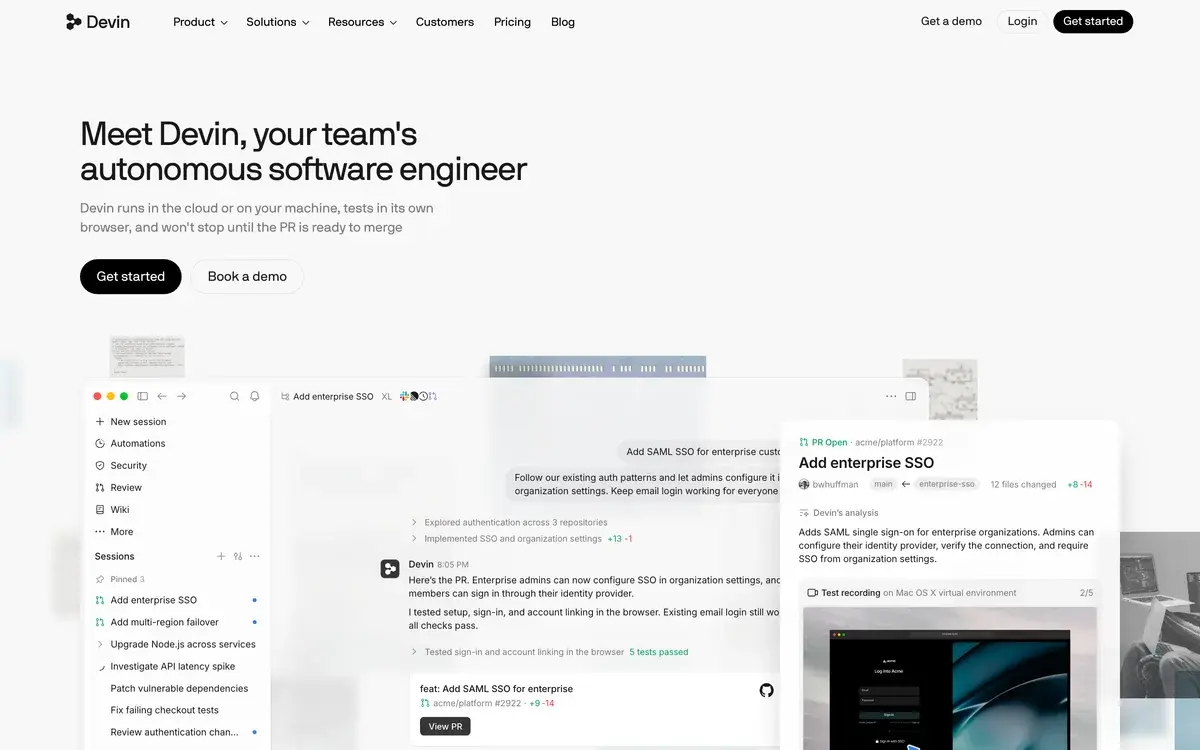
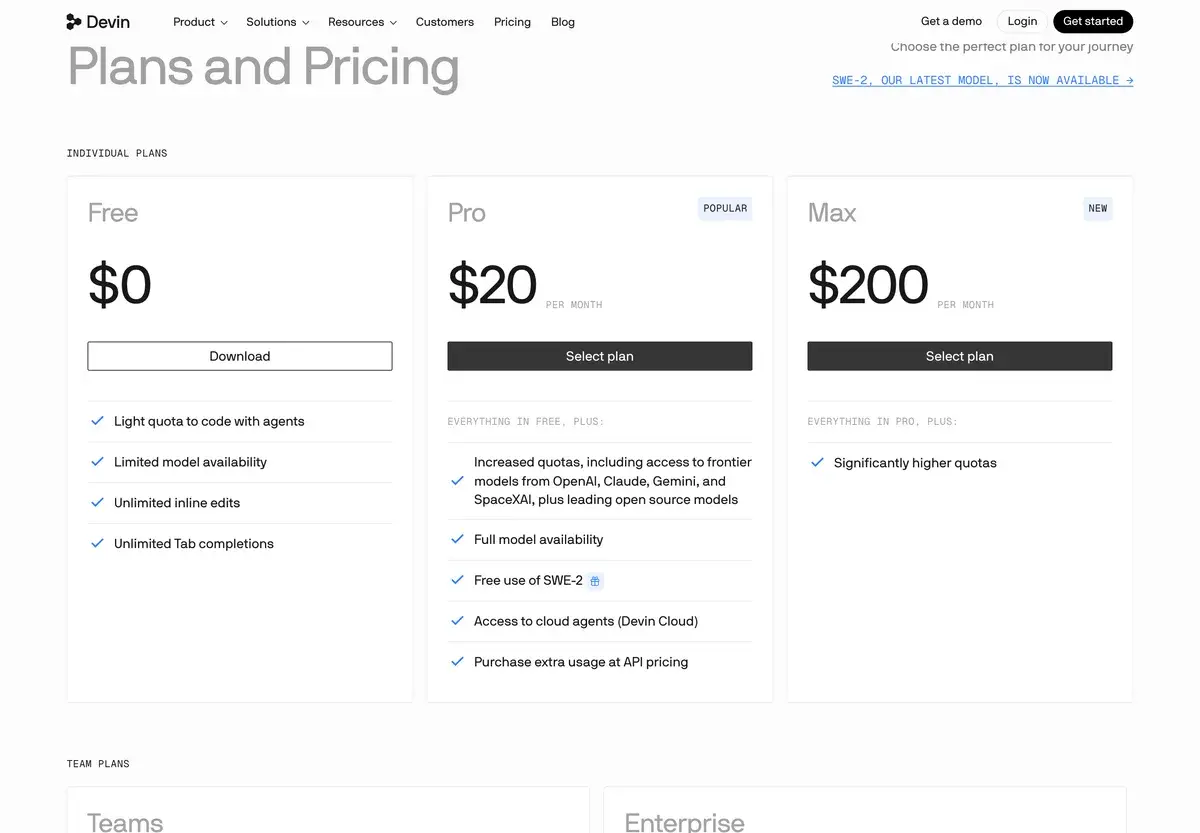
Devin is an autonomous AI software engineering agent from Cognition AI that launched in 2024 with substantial industry attention and somewhat mixed reception. The product was positioned as the first AI software engineer that could complete engineering tasks end-to-end — reading documentation, writing code, running tests, debugging errors, and producing finished outputs without ongoing human prompting at each step. The pricing is $500/month for the Teams plan with 250 Agent Compute Units, plus custom Enterprise pricing for higher-volume needs.
The honest evaluation of Devin in 2026 requires distinguishing between three things: the marketing framing, the actual capability, and the practical use cases where Devin produces genuine value. The marketing framing positions Devin as autonomous AI software engineering — implying broad replacement of engineering work. The actual capability is more bounded — task-execution autonomy on well-defined work, with continued requirements for human task-definition and oversight. The practical use cases where Devin produces value are real and meaningful, though narrower than the framing suggests.
This pattern is common with autonomous AI agents launching in the current cycle. The capability is genuine but more bounded than initial framing implies; users matched to the bounded capability get real value; users expecting the broader framing are often disappointed. Devin specifically is more capable than the early-2024 demos suggested (Cognition AI shipped substantial improvements through 2024-2025) and less universal than the autonomous AI software engineer framing implies. Both can be true.
For engineering teams considering Devin in 2026, the buying decision should be honest about what Devin actually does well, where it struggles, and whether your team's work backlog matches its capability. For the right matched use case, Devin produces meaningful productivity gains that justify the $500/month. For mismatched use cases, the cost is hard to defend.
Where Devin actually delivers
Devin works reliably on bounded engineering tasks with clear specifications and acceptance criteria. Bug fixes where the issue is reproducible and the expected behavior is documented. Feature additions that follow established patterns in the codebase. Test writing for existing functions where the test scenarios are clear. Documentation generation from code and comments. Refactoring work with clear scope boundaries. Dependency updates and similar maintenance tasks. For these task types, Devin executes end-to-end with reasonable reliability and produces finished outputs that meet the specifications.
The value compounds when engineering teams have backlog discipline that produces well-specified tasks suitable for Devin. Teams running mature engineering practices — with clear ticket descriptions, defined acceptance criteria, and documented codebase patterns — find Devin can absorb meaningful backlog volume that would otherwise consume senior engineer time. The senior engineers focus on architecture, design decisions, and complex problem-solving while Devin handles execution on well-defined work.
The Slack integration and progress reporting features support this workflow well. Devin can be assigned tasks through Slack mentions, runs autonomously with periodic progress updates, and produces PRs that humans review and merge. For teams comfortable with this delegate-and-review pattern, Devin functions as an additional team member that handles specific work types.
The end-to-end task completion — reading documentation, writing code, running tests, debugging failures, iterating to a working solution — is genuinely impressive when the task fits Devin's capability. The technical capability of the underlying autonomous execution is real, even if the broader framing oversells what this means in practice.
Where Devin struggles
Tasks with ambiguous requirements remain challenging. When the right answer requires judgment about trade-offs, understanding of business context, or architectural decisions that depend on factors outside the immediate code, Devin can produce plausible outputs that are sometimes wrong. The autonomous execution does not catch its own ambiguity-related errors as well as senior engineers would; the pattern is "Devin produces something that looks right but is subtly wrong in ways that require senior review to catch."
Novel architectural work — building new systems, making framework choices, designing data models — is generally outside Devin's capability. The agent works well within established patterns and codebases; it struggles with greenfield work where the patterns are still being determined.
Debugging where the cause is unclear is another weakness. Devin can fix bugs with clear reproduction steps and expected behavior; it struggles with bugs that require deep system understanding, intuition about likely causes, or willingness to investigate ambiguous symptoms. For complex production bugs, human senior engineers remain better.
Cross-system work involving multiple codebases, complex integrations, or coordination between teams is generally beyond Devin's scope. The agent operates within bounded contexts; work requiring broader organizational and technical context fits human engineers better.
The other practical observation: Devin's reliability varies. The agent sometimes produces excellent outputs on tasks within its capability and sometimes fails or produces low-quality outputs on tasks that seem similar. The variance creates oversight overhead — engineering teams cannot blindly trust outputs and must review work to catch the subset that has problems. This review overhead is meaningful and reduces the productivity gains relative to the framing of "autonomous engineering."
The cost-justification math
At $500/month for 250 ACUs, Devin is meaningfully more expensive than other AI coding tools. Cursor at $20/month, Copilot at $19/month, Claude Code at $20/month (with Claude Pro), and similar tools cost a fraction of Devin's price. Justifying Devin requires it to produce productivity gains beyond what the cheaper alternatives provide.
The honest math: a senior engineer in the United States costs roughly $200K-$400K annually in total compensation, working approximately 2,000 hours per year. This is roughly $100-$200 per hour. For Devin to justify $500/month, it needs to save roughly 3-5 hours of senior engineer time per month — a low bar that most engineering teams should easily clear if Devin is being used appropriately.
In practice, the math gets more complicated. Devin's reliability variance means engineering teams spend time defining tasks suitable for Devin, reviewing outputs, and sometimes redoing work. The net productivity gain after this overhead is often smaller than naive math suggests. For teams where this overhead exceeds the time saved, Devin is net negative; for teams where the matched task volume produces substantial autonomous completion, Devin is meaningfully positive.
The most honest cost-benefit framing: Devin works for engineering teams that have substantial backlog volume of suitable tasks, mature engineering practices that produce well-specified work, and senior engineers willing to review Devin outputs efficiently. Without these conditions, Devin's economics often do not work despite the underlying capability being real.
Who is it for?
Engineering teams with mature backlog management practices, where tickets are well-specified, acceptance criteria are clear, and codebase patterns are documented. Devin's task-execution capability fits the well-defined task volume these teams produce; the cost is justified by absorbing this volume.
Engineering organizations with substantial maintenance work — bug fixes, dependency updates, test coverage improvements, documentation generation. Devin handles these task types reliably and produces meaningful capacity recovery for senior engineers.
Mid-market and enterprise engineering teams (20+ engineers) where the backlog volume justifies the per-month cost and where the workflow integration overhead can be amortized across team productivity. The economics rarely work for individual engineers or very small teams.
Engineering teams with technical debt cleanup initiatives where Devin can absorb high-volume small tasks. Refactoring efforts, test coverage expansion, documentation backfill, and similar systematic cleanup work fit Devin's capability and produce measurable backlog reduction.
Companies with AI-curious engineering leadership willing to invest in evaluating autonomous AI agents on real engineering work. Devin requires meaningful adoption investment; the engineering leaders willing to make that investment may extract value that less-engaged teams cannot.
Organizations producing developer tools or AI products where Devin's capabilities support specific use cases (automated code review, AI-augmented developer workflows, embedded coding agents). For developers building products that benefit from Devin's capabilities, the cost may be justified.
Devin is not the right pick for: individual developers and very small teams (Cursor, Aider, or Claude Code at much lower cost serve these users better), early-stage startups making architectural decisions and building greenfield systems (Devin's bounded task capability does not fit), engineering teams without backlog discipline (Devin underutilizes without well-specified tasks), or organizations where the cost cannot be justified by clear productivity metrics.
Key Features
- Autonomous task execution — completes multi-step engineering tasks end-to-end without continuous human prompting
- Shell access — Devin operates its own terminal, file system, and development environment
- Browser access — can search documentation, read GitHub issues, reference Stack Overflow
- Long-horizon planning — breaks complex tasks into sequential steps and executes them
- Self-debugging — runs tests, encounters errors, debugs and iterates to working solutions
- GitHub integration — reads issues, creates PRs, responds to PR review comments
- Slack integration — task assignment and progress updates through Slack
- Progress reporting — visibility into what Devin is currently doing during autonomous work
- ACU compute model — Agent Compute Units track resource consumption per task
- API access — programmatic task assignment for embedded use cases
- Linear integration — tickets in Linear can be assigned directly to Devin
- Code review responses — Devin can respond to PR feedback and revise its own work
Devin vs Competitors 2026
| Tool | Autonomy level | Task scope | Pricing | Best for |
|---|
| Devin | ✅ Highest (autonomous agent) | ⚠️ Bounded | $500/mo | Mature engineering teams with well-defined backlogs |
| Cursor | ⚠️ Assistant + light agent | Variable | $20/mo | Real-time AI coding assistance |
| Claude Code | ✅ Strong (CLI agent) | Variable | $20/mo (Pro) | Terminal-preferred agentic coding |
| Aider | ✅ Strong (CLI agent) | Variable | BYOK (open source) | Open-source CLI agentic coding |
| Cline | ✅ Strong (VS Code agent) | Variable | BYOK (open source) | Agentic coding within VS Code |
| GitHub Copilot Workspace | ✅ Strong | Variable | $19+ | GitHub-aligned teams |
| Cognition Codeium agents | ✅ Strong | Variable | Bundled | Cognition's broader product line |
| Replit Agent | ✅ Strong (within Replit) | Variable | Bundled | Replit-based development |
| OpenHands (open source) | ✅ Strong | Variable | Free + compute | Self-hosted autonomous agents |
Data verified April 2026 from each provider's pricing pages.
The competitive landscape has changed substantially since Devin's 2024 launch. The autonomous coding agent category has commoditized faster than expected — Claude Code, Aider, Cline, OpenHands, and others provide similar autonomous task execution capabilities at meaningfully lower cost. The capability differentiation Devin had at launch has narrowed.
Devin's remaining differentiation lies in the integrated workflow (Slack assignment, GitHub integration, progress reporting), the cloud-hosted nature (no local setup required), and Cognition AI's product investment in the autonomous agent positioning specifically. For teams valuing these workflow features, Devin justifies the price premium against alternatives. For teams comfortable with CLI tools or VS Code agents, the cheaper alternatives produce comparable autonomous execution capability.
The most honest framing in 2026: Devin is one of several capable autonomous coding agents, with strong workflow integration but premium pricing. Whether the workflow integration justifies the cost over open-source or lower-priced alternatives depends on team preferences and integration priorities.
For developers who would actually pay Cognition AI specifically rather than configure free or cheaper alternatives, Devin works. For developers comfortable building their own autonomous agent workflows, the alternatives produce similar capability at substantially lower cost.
Pricing 2026
| Plan | Price | ACUs | Best for |
|---|
| Teams | $500/mo | 250 | Engineering teams with substantial backlog volume |
| Enterprise | Custom | Custom | Larger teams with high-volume needs and security requirements |
Prices verified April 2026 from devin.ai. ACU consumption varies by task complexity; simple tasks consume 1-3 ACUs, complex multi-step tasks consume 10-30+ ACUs.
The pricing structure is straightforward but premium. $500/month is meaningfully higher than other AI coding tool subscriptions. The Teams tier is positioned for engineering teams of multiple engineers sharing access to Devin for backlog work; for individual engineers, the pricing is generally not justifiable against cheaper alternatives.
Enterprise pricing varies based on volume, security requirements, and integration scope. For organizations with substantial Devin use across multiple teams, Enterprise contracts can produce favorable per-task economics; for occasional use, the Teams tier is the appropriate entry point.
The ACU-based consumption model creates planning overhead. Engineering teams should expect to learn ACU consumption patterns through several months of use before predicting monthly needs accurately. Tasks consuming more ACUs than expected produce surprises early in adoption.
Hands-on Notes
The first thing that affects practical use is how Devin's autonomous execution works in actual engineering workflows. Assigning a well-specified ticket — "Add unit tests for the UserAuthentication class with the following test cases..." — and watching Devin execute autonomously produces a workflow that other AI coding tools do not match. The agent reads the codebase, writes tests, runs them, iterates on failures, and produces a finished PR. For tasks within Devin's capability, this works.
The reliability variance becomes apparent within the first few weeks of use. Some tasks complete excellently with minimal review needed; some tasks produce outputs that look correct but contain subtle issues; some tasks fail in ways that require human intervention to recover from. The variance creates an oversight overhead that the autonomous-engineering framing does not fully capture. Engineering teams using Devin successfully tend to develop intuition for which tasks fit Devin and which do not.
The Slack integration is one of the better-implemented workflow features. Tagging Devin in Slack with a task description and watching the progress updates flow back into the channel produces a delegate-and-review pattern that fits modern remote engineering team workflows. For teams already using Slack as a work coordination tool, this integration matters.
The GitHub integration handles the PR creation, review response, and merge workflow well. Devin produces PRs with clear descriptions, responds to review comments by updating the PR, and follows reasonable engineering conventions. For teams with strong PR review culture, this fits naturally; for teams without strong review practices, Devin's outputs can land without sufficient scrutiny.
Where Devin gets weaker is exactly where the framing oversells. "Autonomous AI software engineer" implies capability that exceeds what Devin actually does. The agent is a capable task executor on well-defined work; it is not a substitute for the judgment, context, and creativity that human engineers contribute. Treating Devin as "junior engineer with managed oversight" produces better outcomes than treating it as "autonomous senior engineer." The framing affects how teams use the tool and how they evaluate its outputs.
The cost discipline question is real. $500/month requires meaningful productivity gains to justify; teams adopting Devin without clear use cases often find usage drifting low and cost-justification weakening over time. Successful Devin deployments tend to have explicit metrics — backlog tickets completed by Devin, engineer time saved, specific task categories Devin handles — that support ongoing cost justification.
The other practical consideration: Cognition AI has shipped substantial product improvements through 2024-2025 that addressed many early reliability concerns. The current product (2026) is more capable than the version that received mixed reviews at launch. Engineering teams who evaluated Devin negatively in 2024 should re-evaluate in 2026 with current capabilities; the tool has genuinely improved.
For engineering leaders evaluating Devin against alternative autonomous agents (Claude Code, Aider, Cline, OpenHands), the honest comparison is whether Cognition AI's product investment, integration polish, and workflow features justify the price premium against alternatives that provide similar core capability at lower cost. The answer depends on team preferences and integration priorities; reasonable engineers can disagree on the buying decision.
Use Cases
A 50-person engineering organization at a Series C SaaS uses Devin Teams for backlog acceleration on well-defined tasks. Bug fixes with clear reproduction steps, test coverage expansion, dependency updates, and documentation generation are routinely assigned to Devin via Linear-Slack integration. Senior engineers review and merge Devin PRs alongside their primary work. The team estimates Devin absorbs ~20-30% of backlog volume that would otherwise consume engineer time.
A platform engineering team at an enterprise uses Devin for technical debt cleanup initiatives. Quarterly cleanup pushes (refactoring legacy patterns, expanding test coverage, updating dependencies) absorb Devin's capability productively; the systematic nature of cleanup work matches Devin's bounded task execution. The team produces measurable code quality improvements with proportionally less senior engineer investment.
An early-stage startup of 6 engineers evaluates Devin and determines the cost is not justified at this team scale. The engineers' work involves substantial architectural decisions and greenfield development that Devin handles poorly; the well-defined task volume that Devin handles well does not yet exist at this stage. The team uses Cursor at $20/seat for assistance instead and revisits Devin if the business scales to where the economics work.
A mid-market engineering team uses Devin for documentation generation and test backfill across a legacy codebase. The systematic nature of the work matches Devin's strengths; the documentation deficit reduction over 6 months is substantial. The cost is justified by the alternative of hiring contractors or dedicating senior engineer time to this work.
A senior engineer evaluates Devin alongside Claude Code and Aider for personal use. After several weeks of comparison, the engineer settles on Claude Code at $20/month — the autonomous agent capability is comparable, the cost is dramatically lower, and the personal use case does not benefit from Devin's team-workflow features. This use case reveals where Devin's positioning works least — for individual developers, the alternatives often suffice.
Our Verdict
Devin is a capable autonomous coding agent that delivers on its core capability — completing well-defined engineering tasks end-to-end — better than most alternatives. For engineering teams with mature backlog discipline, substantial volume of suitable tasks, and willingness to invest in adoption, Devin produces measurable productivity gains that justify the $500/month cost.
The honest considerations: the autonomous coding agent category has commoditized substantially since Devin's launch. Claude Code, Aider, Cline, OpenHands, and others provide similar capability at meaningfully lower cost. Devin's remaining differentiation is integrated workflow features, cloud-hosted convenience, and Cognition AI's continued product investment. Whether these features justify the price premium against alternatives depends on team preferences.
The cost is meaningful enough to require disciplined cost-justification. Engineering teams adopting Devin should establish explicit metrics for Devin's contribution and evaluate whether the productivity gains justify the cost over time. Teams without these metrics often find usage drifting and cost-justification weakening.
For mature engineering teams matched to Devin's capabilities, with backlog volume that fits autonomous execution, Devin earns its place despite the cost. For individual developers, very small teams, early-stage startups, or teams without backlog discipline, alternatives produce better economics for the matched use cases. The buying decision should be honest about whether your team's actual work matches what Devin does well.
Note: Devin does not currently have an active affiliate program with AIVario. AIVario earns no commission from sign-ups. Our rating reflects evaluation through customer interviews and product documentation alongside hands-on testing of Teams tier capabilities.
Best for: Engineering teams with mature backlog management, mid-market and enterprise engineering organizations (20+ engineers), platform engineering teams with technical debt cleanup initiatives, organizations with substantial maintenance work volume, AI-curious engineering leaders willing to invest in autonomous agent adoption
Not ideal for: Individual developers (use Cursor, Claude Code, or Aider at lower cost), early-stage startups making architectural decisions, engineering teams without backlog discipline, novel architectural work and greenfield development, teams unable to justify $500/month against measurable productivity gains
Bottom line: Capable autonomous coding agent with strong workflow integration but premium pricing in a category that has commoditized. Match the buying decision to whether your team's actual work matches Devin's bounded task-execution strengths.
Related Tools
- Claude Code — CLI autonomous agent alternative at substantially lower cost
- Cursor — AI-first IDE alternative for users wanting AI assistance rather than autonomous execution
- Aider — open-source CLI autonomous agent alternative
- GitHub Copilot — AI coding assistant alternative for users wanting traditional Copilot pattern
- Linear — engineering project management that integrates with Devin for ticket assignment
Frequently Asked Questions about Devin
How much does Devin cost?
Devin's Teams plan is $500/month for 250 ACUs (Agent Compute Units). Enterprise pricing is custom for higher volume needs. ACU consumption per task varies — simple tasks consume 1-3 ACUs, complex multi-step tasks consume 10-30+ ACUs. The pricing is meaningfully higher than other AI coding tools and reflects the autonomous-agent positioning rather than per-seat assistance.
Is Devin actually autonomous?
Within bounds, yes. Devin can take a well-defined task and execute it end-to-end — read documentation, write code, run tests, debug errors, and produce a finished output. The autonomous execution genuinely works for tasks within its scope. However, Devin requires task-level human input (clear specifications, acceptance criteria) and ongoing oversight; the autonomy is task-execution autonomy rather than full software-engineering autonomy. Treating Devin as a junior engineer with managed oversight produces better outcomes than treating it as a fully autonomous senior engineer.
What can Devin actually do well?
Well-defined backlog tasks with clear acceptance criteria — bug fixes with specific reproduction steps, feature additions following established patterns, test writing for existing functions, documentation generation, refactoring tasks with clear scope, dependency updates, and similar bounded engineering work. Devin handles these tasks end-to-end with reasonable reliability and frees engineering team capacity for work requiring more judgment.
Where does Devin struggle?
Tasks with ambiguous requirements, novel architectural decisions, work requiring deep system understanding, debugging where the cause is unclear, and tasks where the right answer requires judgment about trade-offs that have not been documented. Devin can make plausible decisions in these contexts that are sometimes wrong in ways that are not caught until later. Treating Devin as needing senior engineering oversight on judgment-required work produces better outcomes.
Is Devin worth $500/month?
Depends on actual use. Engineering teams with substantial well-defined backlogs and tasks that map to Devin's capabilities can produce meaningful productivity gains that justify the cost. Engineering teams without this backlog discipline often find Devin underutilized at the price point. The honest math: a single engineer's time saved per month roughly justifies $500; if Devin is reliably saving more than that, the investment works. If the team is figuring out what to use Devin for, the investment is harder to justify.
How is Devin different from Cursor or Aider?
Different positioning along the human-AI collaboration spectrum. Cursor and Aider are AI tools that assist developers writing code in real-time; the developer maintains primary control, AI assists. Devin is an agent that takes tasks and executes them independently; developers manage tasks and oversight rather than directly writing code. For tasks where the developer wants to do the work with AI assistance, Cursor or Aider. For tasks the developer wants to delegate entirely, Devin (when the task fits Devin's capability).
Does Devin replace junior engineers?
Not really, despite some framing in industry discourse. Devin can handle tasks that junior engineers would do, but human junior engineers learn from the work, develop judgment over time, contribute to team culture, and grow into senior roles in ways Devin does not. Treating Devin as augmentation that handles specific tasks rather than as substitution for human engineers produces better outcomes both operationally and culturally. Engineering teams using Devin successfully tend to use it for backlog acceleration rather than headcount replacement.
Has Devin improved since the early demos?
Yes, meaningfully. Cognition AI shipped substantial improvements through 2024-2025 that addressed many of the reliability concerns from initial demos. The current product (2026) is more capable than the version that received mixed reviews after launch. That said, the gap between demonstration capability and reliable production use remains real for autonomous agents in this category, and honest evaluation should include both peak capability and reliability expectations.