Smartlead

Smartlead

🔥 Hot
Cold Email & Outreach
Quick answer

Smartlead is the cold email platform for operators running serious inbox volume — unlimited mailbox connections with warmup included, deep inbox rotation, and an API-first architecture that agencies build workflows on top of. Plans run $39 for Basic, $94 for Pro and $174-plus for Custom, with agency client management at $29 each. It's consistently the pick for operations managing 30 to 300-plus inboxes, where rotation logic and programmatic control matter more than interface polish. The competing consideration in 2026 is that sending capacity stopped being the constraint — domain reputation did.

Best for: Agencies and technical operators running outbound across many inboxes and clients
Skip if: You're one founder sending 150 emails a day — this is more machine than you need
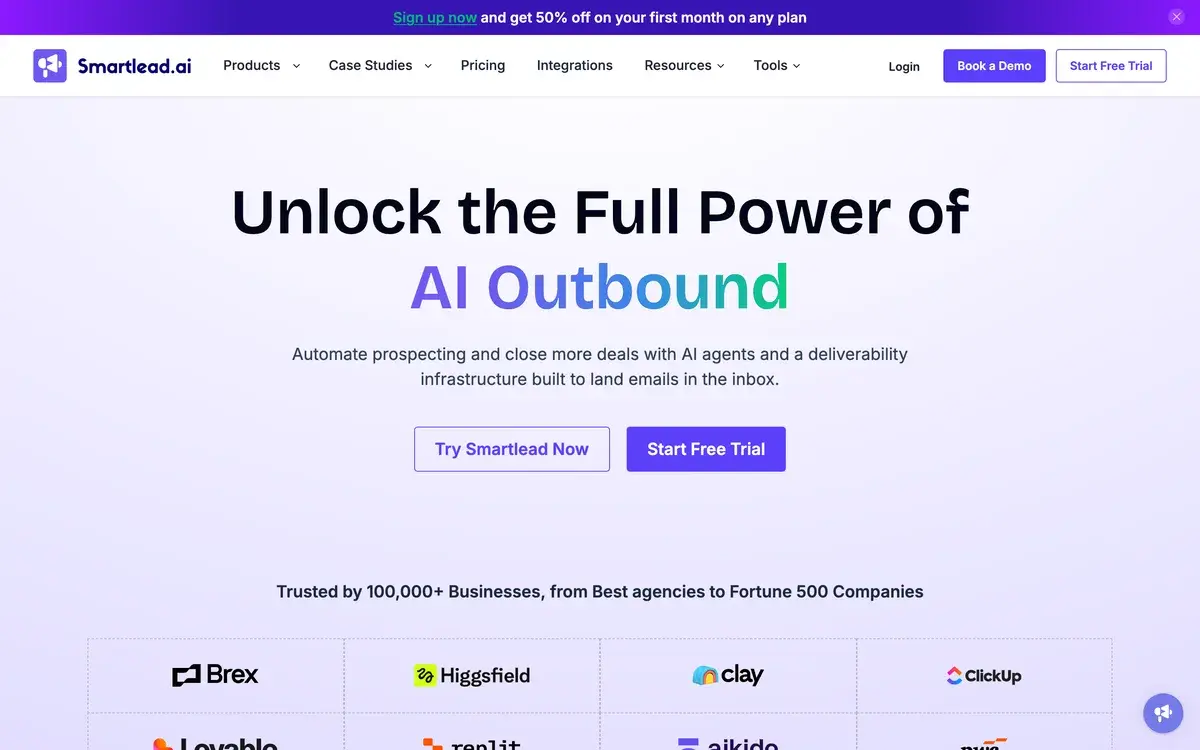
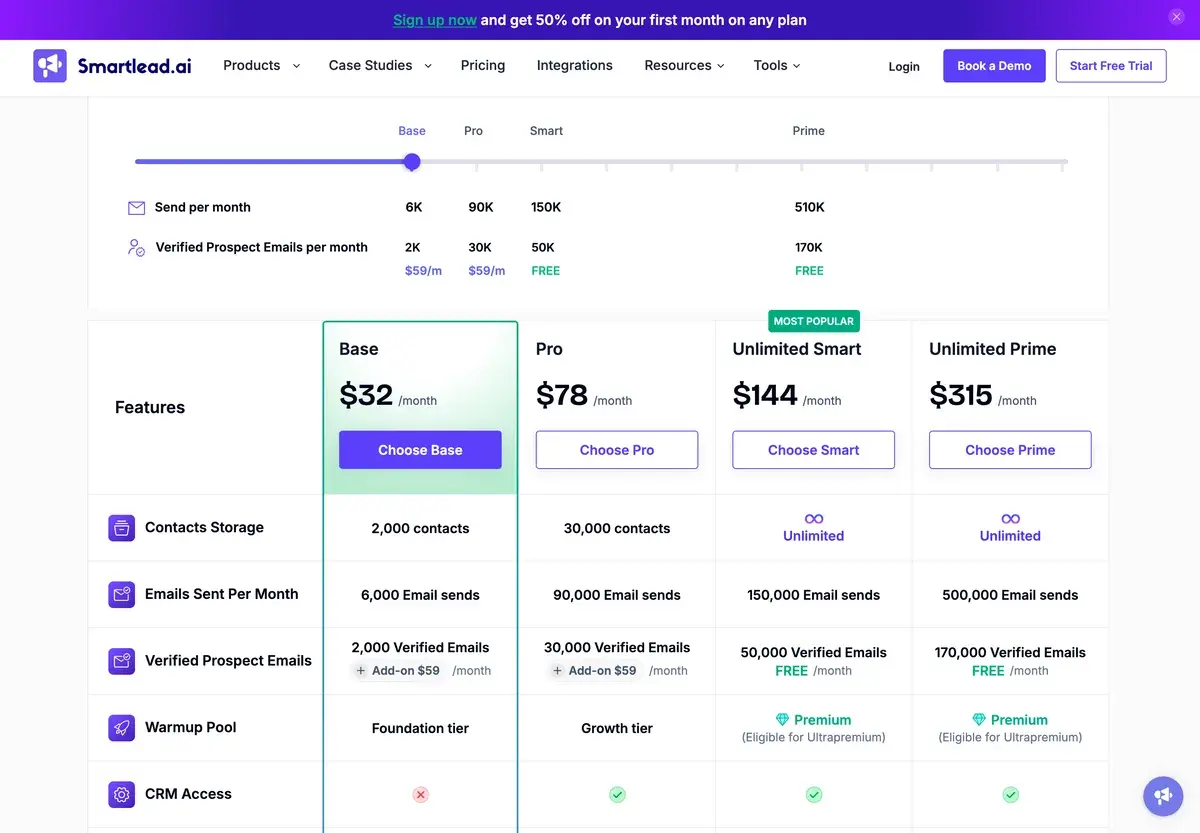
$39 Basic · $94 Pro · $174+ Custom · $29 per agency client
EdGrowsReviewed by EdGrows·Updated Aug 18, 2026
Try Smartlead for free

Affiliate link — we may earn a commission

Researched

This analysis is based on documentation, public user reports, and vendor materials — not yet on our own hands-on testing. How we rate

Built for the operator, not the founder

Smartlead's positioning is unusually clear once you look at who buys it: agencies and technical teams running outbound across dozens or hundreds of inboxes.

The features follow from that. Unlimited mailbox connections with warmup included rather than metered. Deep inbox rotation logic. API-first architecture you can build systems on. Agency client management at around $29 per client.

None of that matters to a founder sending 150 emails a day from four inboxes. All of it matters to someone managing ten clients across 200 accounts, which is exactly the operation Smartlead is shaped for.

PlanMonthlyFor
Basic$39Solo operators, small volume
Pro$94Growing teams
Custom$174+Agency scale, usage-based on leads
Agency clients+$29 eachClient workspaces and reporting

Ten clients on Custom is roughly $464 a month all in — which sounds like a lot until you compare it against per-seat platforms at the same scale.

The pricing comparison that doesn't decide anything

Against Instantly: entry $39 versus $37, mid-tier $94 versus $97.

Those differences are noise. Anyone choosing between these two on price is optimising the wrong variable.

The real split is operational shape. Smartlead wins on rotation depth, API control and agency client management. Instantly wins on setup speed, interface and a bundled database. A technical operator building a system takes Smartlead; a founder who wants to be sending by lunchtime takes Instantly.

Both require you to buy inboxes separately, at roughly $5 to $8 each — which at 100 inboxes is $500 to $800 a month, several times the platform fee. Any comparison that stops at the subscription is comparing the smaller half of the bill.

Why rotation became the product

In 2023, inbox rotation was a nice feature. In 2026 it's the mechanism that makes volume possible at all.

Current deliverability practice caps safe sending at two to three inboxes per domain and roughly 40 to 50 emails per inbox per day. A campaign of any meaningful size therefore has to spread across dozens of accounts on many domains, with sending distributed so no single one accumulates enough volume or complaints to get flagged.

Doing that manually is impossible past a handful of inboxes. Rotation logic is what turns it into configuration.

This is why Smartlead's technical reputation translated into market position: it built the machinery for a constraint that hadn't fully arrived yet, and then the constraint arrived.

The rules that reshaped the category

Worth stating plainly, because it applies to every platform here and changes how you should evaluate all of them.

February 2024 — Google and Yahoo required SPF, DKIM, DMARC, one-click unsubscribe and complaint rates under 0.30% for volume senders.

May 2025 — Microsoft enforced a near-identical framework for Outlook, covering roughly a third of B2B inboxes.

November 2025 — Gmail switched from soft deferrals to permanent rejections.

Through 2026 enforcement hardened further. Failing mail is refused at the receiving server, not filtered — there's no spam folder to recover from, and repeated rejections damage the domain's wider reputation. Vendors tracking Microsoft report automated flagging near a 0.10% complaint rate, new-domain caps around 200 sends a day with a 30-day ramp, and automated review for campaigns under 8% opens.

Published reply rates now range from 0.45% across 7.5 million sends in one study to 3.7% in others. That spread is the finding: results depend on list quality, authentication and infrastructure far more than on which platform sends the mail.

The implication for buyers: you're no longer choosing software that determines outcomes. You're choosing software that makes the infrastructure work manageable. Smartlead is unusually good at that, and it still can't send successfully from a badly authenticated domain.

Where it doesn't fit

Solo founders on modest volume. More machinery than the job needs; Instantly is faster to run.

Teams wanting a bundled database. Smartlead expects external data sources — Apollo or Clay.

Multichannel sequences. No native LinkedIn or calling. Lemlist or Reply.io.

Anyone hoping software substitutes for deliverability discipline. It doesn't, anywhere, anymore.

Smartlead vs the alternatives

Against Instantly: Instantly matches it on price and beats it on setup speed, interface and bundled data. Smartlead beats it on rotation, API depth and agency client management at $29 each. Scale and technical control point one way, speed and simplicity the other.

Against Lemlist: Lemlist charges per user and adds native LinkedIn plus calling. For high-volume email-only work, Smartlead's flat-plus-client model is far cheaper; for personalised multichannel sequences at low volume, Lemlist is the better tool.

Against Apollo: Apollo is a database with sending attached, metered by credits. Smartlead is sending infrastructure with no database. The standard pairing is Apollo or Clay for data, Smartlead for delivery.

Against Reply.io: Reply.io is per-seat sales engagement with CRM depth and multichannel workflow — built for structured sales teams rather than volume operations.

Against Saleshandy: a common comparison in this space that gets expensive at higher tiers; most teams at scale find better economics with Smartlead or Instantly.

Pricing 2026

ItemCost
Basic$39/month
Pro$94/month
CustomFrom $174/month, usage-based on lead volume
Agency client~$29 each
Mailbox warmupIncluded, unlimited
InboxesSeparate, ~$5–8 each

Checked August 2026. Reported pricing is consistent across sources at $39 / $94 / $174+ with agency clients around $29 each, though Custom tier costs scale with lead volume. Unlimited mailbox connections and warmup are included rather than metered. Inboxes are purchased separately on every platform in this category and typically exceed the subscription cost at scale. Confirm on smartlead.ai before committing.

Price inboxes first. At 100 inboxes they're $500 to $800 a month against a $174 platform fee. That's the real budget line.

Buy Smartlead for scale, not for features. If you're running fewer than about ten inboxes, the rotation and API depth are capability you're paying for and not using.

Agencies should model per-client cost. $29 each adds up, and it's still generally better value than per-seat platforms at ten clients.

Get authentication right before volume. SPF, DKIM, DMARC aligned; 30-day domain ramp; two to three inboxes per domain; complaints under 0.10%. No platform compensates for skipping this.

Our Verdict

Smartlead is the cold email platform for people who think of outbound as infrastructure rather than as a campaign. Unlimited mailbox connections with warmup included, genuinely deep inbox rotation, API-first architecture and agency client management at $29 each make it the clear pick for operations running 30 to 300-plus inboxes across multiple clients. At $39 to $174-plus it prices well against per-seat rivals at exactly the scale where per-seat models break.

It's also more machine than most buyers need. Setup is slower than Instantly's, the interface is functional rather than polished, and there's no bundled database — you bring Apollo, Clay or another source. For a founder running four inboxes, that's capability paid for and unused.

The broader caveat matters more than any feature gap. Sender rules moved from advisory to enforced across 2024–2026, with Gmail now issuing permanent rejections rather than routing to spam, a practical complaint ceiling near 0.10%, and published reply rates as low as 0.45% on volume sends. Rotation and warmup make compliant sending manageable; they don't make non-compliant sending work. Any platform sold on volume in 2026 needs reading with that in mind, this one included.

For agencies and technical operators, recommend at Pro or Custom. For solo founders, Instantly gets you sending faster for the same money.

Note: Smartlead does not currently have an affiliate program with AIVario. We earn no commission, and this rating carries no commercial incentive.

Best for: Lead-gen agencies managing multiple clients, operations running 30–300+ inboxes, technical teams building programmatic outbound, high-volume B2B email Not ideal for: Solo founders on modest volume, teams wanting a bundled contact database, multichannel sequences with LinkedIn or calling, anyone expecting software to fix deliverability Bottom line: The strongest sending infrastructure in the category at agency scale — priced well, technically deep, and still subject to rules that now reject non-compliant mail outright.

  • Instantly AI — same price, faster setup, bundled database
  • Apollo.io — the data layer Smartlead deliberately doesn't include
  • Lemlist — multichannel sequences for lower-volume personalised outreach
  • Reply.io — sales engagement with CRM depth for structured teams
  • Clay — enrichment orchestration feeding Smartlead campaigns

Frequently Asked Questions about Smartlead

How much does Smartlead cost in 2026?

Basic at $39 a month, Pro at $94 and Custom from $174, with pricing usage-based on lead volume. Agency client management adds around $29 per client, so ten clients pushes a Custom plan toward $464 total. Unlimited mailbox connections and warmup are included on paid plans rather than metered, which is the main structural difference from platforms that charge per mailbox or per seat.

How does it compare to Instantly on price?

Almost identically, which is why the choice isn't about cost. Entry is $39 against Instantly's $37; mid-tier is $94 against $97. Those gaps are noise. The real difference is operational: Smartlead has stronger inbox rotation and API depth, Instantly has faster setup and a bundled database. Agencies generally find Smartlead's $174 Custom plan with client management better value than Instantly at equivalent scale.

What does inbox rotation actually do?

It distributes sending across many connected mailboxes so no single inbox or domain carries enough volume to trip reputation thresholds. That mattered moderately in 2023 and matters enormously now — deliverability practice caps safe sending at roughly two to three inboxes per domain and 40 to 50 emails per inbox daily, so a campaign of any size requires spreading across dozens of accounts. Rotation logic is the machinery that makes that manageable rather than manual.

Why is the API a selling point?

Because agencies build systems rather than run campaigns. API-first architecture lets you provision inboxes, launch sequences, pull reply data and sync to client reporting programmatically instead of clicking through an interface for every account. For an operation managing outbound for ten clients across 200 inboxes, that difference is the job. For a founder sending from four inboxes, it's irrelevant.

Is unlimited warmup genuinely included?

Yes, and it's a real cost difference. Several competitors meter warmup or sell it as an add-on; Smartlead bundles it across connected mailboxes. Given that new domains now need roughly a 30-day ramp with sends capped low — some vendors report Microsoft flagging new domains above about 200 a day — warmup is continuous infrastructure rather than a one-time setup step. Not paying per mailbox for it changes the economics at scale.

Do I still buy inboxes separately?

Yes, as with every platform in this category. Smartlead connects your own Google Workspace or Microsoft 365 accounts via OAuth. Inboxes run roughly $5 to $8 each depending on provider, which at 100 inboxes is $500 to $800 a month — several times the platform fee. Any cost comparison between platforms that ignores inbox spend is comparing the smaller half of the bill.

What changed for cold email in 2026?

The penalty for getting it wrong. Google and Yahoo made authentication mandatory for volume senders in February 2024, Microsoft followed in May 2025, and Gmail moved from soft deferrals to permanent rejections by November 2025. Non-compliant mail is now refused at the receiving server rather than filtered to spam. The practical complaint ceiling sits near 0.10% against Google's published 0.30%, and crossing it takes seven consecutive compliant days to recover from.

Is high-volume cold email still viable?

Viable and harder, with the economics shifted. One study across 7.5 million sends put average reply rates at 0.45%, while other published figures reach 3.7% — the spread reflects list quality and infrastructure rather than software. High volume still works when authentication, warmup and list hygiene are disciplined. What stopped working is the spray approach the new rules were specifically written to stop, and that's the model most struggling outbound programmes are still running.

View all →