You.com

You.com

AI Search Engine
Quick answer

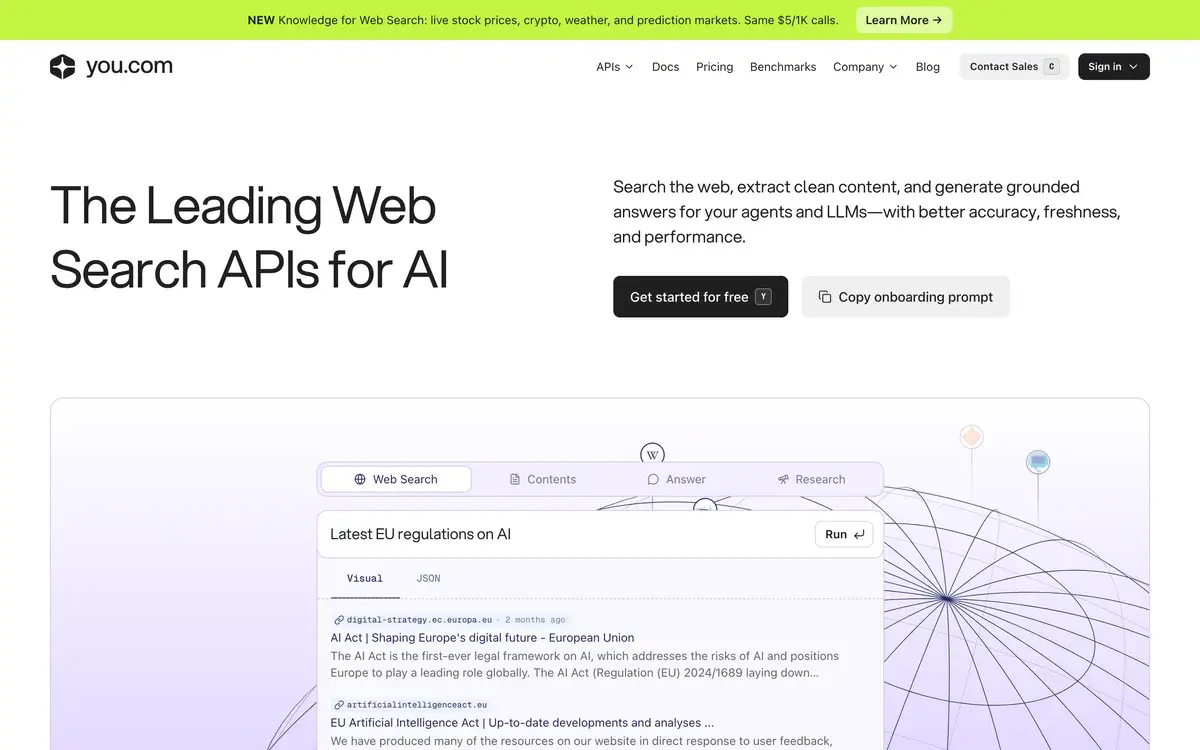
You.com began as a consumer AI search engine competing with Perplexity, and in 2026 it is something else: an API-first developer platform built around Search, Contents, Research and Finance Research endpoints, plus ARI, its enterprise research agent. The consumer subscriptions that used to sit at you.com/plans no longer have a public pricing page. If you're evaluating You.com as a Perplexity alternative today, the honest answer is that the company has largely stopped competing for that user and now sells retrieval infrastructure to developers.

Best for: Developers grounding agents and RAG pipelines in real-time web data
Skip if: You wanted a consumer Perplexity alternative — that's not really this product anymore
Free API tier · consumer plans no longer publicly listed
EdGrowsReviewed by EdGrows·Updated Aug 18, 2026
Try You.com for free

Affiliate link — we may earn a commission

Researched

This analysis is based on documentation, public user reports, and vendor materials — not yet on our own hands-on testing. How we rate

The product you're looking for may not exist anymore

If you arrived here comparing AI search engines, the useful thing to know first is that You.com has largely stopped competing in that market.

The company began as a consumer AI search product — Free, Pro at $20, Team at $30 — going directly at Google and later at Perplexity. By mid-2026, the consumer plans had no public pricing page at all. The pricing that is published now lives at you.com/pricing and describes a developer platform: Search, Contents, Research and Finance Research APIs, billed by usage.

The sequence is legible in hindsight. A September 2024 Series B reframed the company "from AI search to deeper productivity agents." ARI Enterprise launched in May 2025, with reporting that it outperformed OpenAI's Deep Research in head-to-head tests. By September 2025 the $30 Team plan had been replaced by a $200 Max plan built around unlimited ARI reports. A month later the developer API platform launched, and over the following two quarters the agent APIs became a usage-billed Research API.

That's not a company neglecting its consumer product. That's a company that decided where its actual business was.

What it is now

Four API endpoints, exposed through REST with SDKs, a CLI and an OpenAPI spec:

  • Search — web results for grounding
  • Contents — full page content retrieval
  • Research — the ARI agent, sold per call
  • Finance Research — filings, macro data, markets, with traceable citations

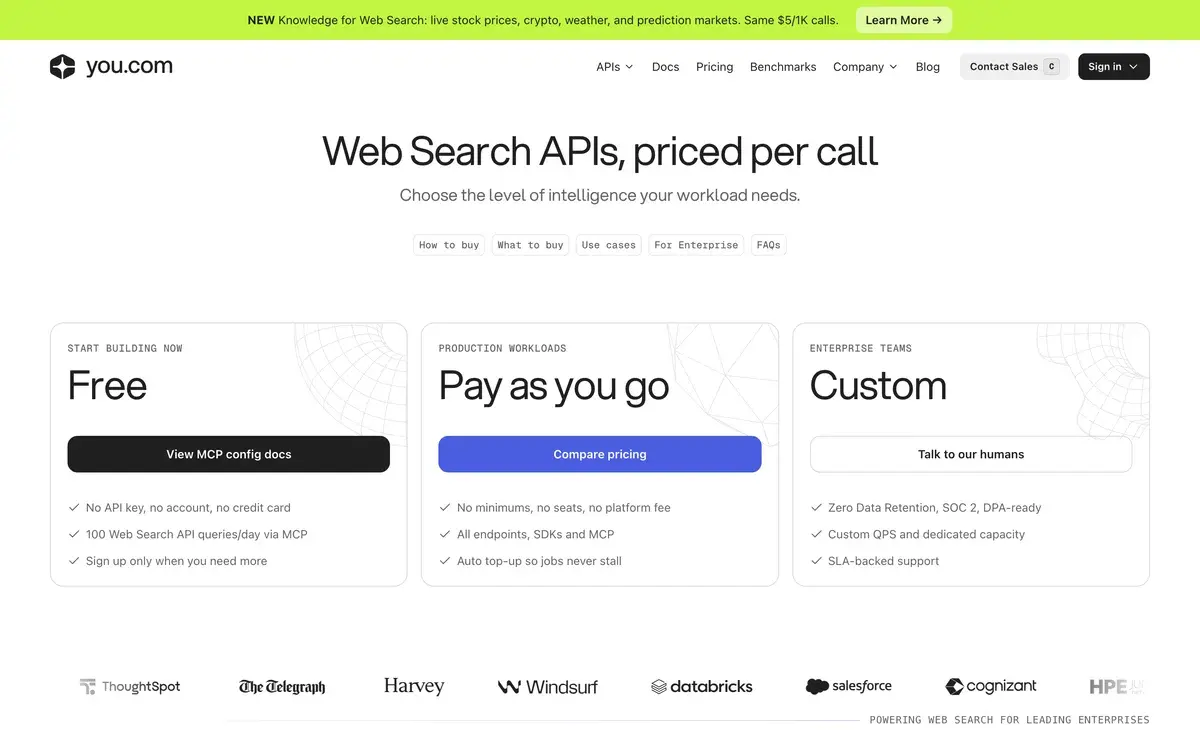
Plus an MCP server that plugs into Claude, Cursor, VS Code and JetBrains, and a free developer tier reported at around 100 queries a day with no signup.

The distinctive pricing idea is worth noting because almost nobody else does it: the Research endpoints expose a research_effort parameter that maps directly to a per-1,000-call price. You're billing the depth of the investigation rather than tokens consumed. For applications where some queries need a two-second answer and others need a genuine dig, that's a more honest cost model than flat per-token rates.

ARI, and why the pivot made sense

ARI is the research agent everything else now orbits. It analyses large numbers of sources — around 400, with the enterprise version reaching further across web, internal and premium data — and returns cited PDF reports with interactive visualisations in minutes, every citation linking back to its source.

Positioned for regulated industries, it comes with SOC 2 certification and zero-data-retention options where queries and data can be auto-purged. That's the combination consulting firms, financial institutions and media organisations need before research tooling clears a compliance review.

Read against the market, the logic is sound. You.com was never going to out-distribute Perplexity or ChatGPT for consumer mindshare. Selling deep research capability into regulated enterprises, and retrieval infrastructure to developers building agents, is a smaller market with far fewer competitors and much better margins.

What this means if you were a user

If you subscribed as an individual: check your account directly rather than public pages, and understand that consumer development is not where attention is going. Perplexity is the active product in that category, with a maintained free tier and clear pricing.

If you're a developer: this is now genuinely worth evaluating. The free tier at around 100 queries a day with no signup is a low-friction way to test whether the search quality suits your pipeline, and the MCP server means it drops into Claude or Cursor without custom integration work.

If you're an enterprise buyer: ARI Enterprise is a serious product with the compliance posture to match, and the effort-based pricing model suits variable research workloads better than seat licences.

Where it doesn't fit

Consumer AI search. The product isn't being built for that anymore, whatever remains accessible.

Anyone needing published, stable consumer pricing. Not having a public plans page is itself the answer.

General-purpose assistant work. This was always a search product, and it's now a search infrastructure product. ChatGPT or Claude for assistant tasks.

Buyers who need long-term product stability. Two major strategy shifts in two years is a legitimate consideration for anyone standardising on a vendor.

You.com vs the alternatives

Against Perplexity: Perplexity won the consumer answer-engine market that You.com started in, and its Sonar API is the closer comparison today. Perplexity offers both halves — a maintained consumer product and a developer API. You.com has concentrated on the second, which makes it more focused and less useful to individuals.

Against Gemini: Gemini's Deep Research covers similar ground for consumers inside a broader assistant at $19.99. For an individual wanting research reports, that's a far simpler purchase than working out what You.com currently sells.

Against Undermind: Undermind goes deeper on scientific literature specifically, where ARI is broader across web, internal and premium sources. Academic research points one way; commercial and financial research points the other.

Against Glean: Glean indexes an organisation's internal knowledge across its whole stack. ARI Enterprise reaches across internal and external sources for research reports. Adjacent problems, and increasingly compared in the same enterprise evaluations.

Against Elicit: Elicit is purpose-built for academic paper screening and extraction, a narrower and deeper job than ARI's general research reports.

Pricing 2026

ProductPricing
Developer API free tier~100 queries/day, no signup reported
Search / Contents APIsUsage-based
Research / Finance Research APIsPriced by research_effort, per 1,000 calls
ARI EnterpriseCustom, contracted
Consumer plansNo public pricing page as of mid-2026

Checked August 2026. You.com moved from consumer subscriptions (Free / Pro $20 / Team $30, with Team replaced by a $200 Max plan in September 2025) to an API-first developer platform, and by mid-2026 the consumer plans had no public pricing page. Current published pricing is at you.com/pricing and covers the API products. Existing subscribers should verify status in-account rather than from public pages.

Developers: start with the free tier. Around 100 queries a day with no signup is enough to judge whether the search quality fits your pipeline before any commitment.

Use the MCP server if you're in Claude or Cursor. It removes the integration work entirely, which is the fastest way to evaluate this properly.

Enterprise buyers: price ARI on effort, not seats. The research_effort model suits workloads where query depth varies, which is most real research.

Individuals: look at Perplexity instead. Not a criticism of You.com — just an accurate description of who each product is currently built for.

Our Verdict

You.com made a rational decision and executed it quietly. It could not out-distribute Perplexity and ChatGPT for consumer AI search, so it rebuilt around ARI — a research agent that reportedly outperformed OpenAI's Deep Research in head-to-head testing — and turned that capability into developer APIs and enterprise contracts. The Search, Contents, Research and Finance Research endpoints, the MCP server that drops into Claude and Cursor, and effort-based research pricing are all sensible bets on where agentic applications are actually heading.

For developers grounding agents in real-time web data, or enterprises needing cited research inside a compliance boundary with SOC 2 and zero-data-retention options, this is a credible and focused product.

For everyone else, the honest answer is that You.com stopped building for you. The consumer plans have no public pricing page, and anyone landing here looking for a Perplexity alternative should know that before spending time on it. Two major strategy shifts in two years is also a fair thing to weigh if you're considering standardising on the platform.

The rating reflects that split: a good infrastructure product and a discontinued-in-practice consumer one, reviewed as a single tool.

For developers and enterprise research buyers, worth evaluating. For individuals, look elsewhere.

Note: You.com does not currently have an affiliate program with AIVario. We earn no commission, and this rating carries no commercial incentive.

Best for: Developers building agents and RAG pipelines, enterprise research in regulated industries, financial research workflows, teams already working in Claude or Cursor via MCP Not ideal for: Individual users wanting a consumer answer engine, buyers needing published stable pricing, general assistant tasks, anyone prioritising vendor strategic stability Bottom line: A well-executed pivot from consumer AI search to research infrastructure — genuinely useful for developers, and no longer a product built for individuals.

  • Perplexity — the consumer answer engine You.com stopped competing with
  • Gemini — Deep Research inside a general assistant, simpler for individuals
  • Undermind — deeper scientific literature search for academic work
  • Glean — enterprise knowledge search across your internal stack
  • Elicit — purpose-built academic paper screening and extraction

Frequently Asked Questions about You.com

Can I still subscribe to You.com as a consumer?

It's no longer a clearly advertised path. By mid-2026 the consumer plans that lived at you.com/plans had no public pricing page, completing a shift toward the API-first platform at you.com/pricing. The earlier consumer ladder ran Free, Pro at $20 and Team at $30, with the Team plan replaced by a $200 Max plan built around unlimited ARI reports in September 2025. If you're an existing subscriber, check your account directly rather than relying on public pages.

What is ARI?

You.com's research agent, and the centre of its current strategy. ARI analyses large numbers of sources — up to around 400, with the enterprise version extending further across web, internal and premium data — and returns cited PDF reports with visualisations in minutes. Every citation links back to its source. ARI Enterprise launched in May 2025 and was reported to beat OpenAI's Deep Research in head-to-head testing, which is what convinced the company to build the business around it.

What does the developer API offer?

Four endpoints: Search, Contents, Research and Finance Research, exposed via REST with SDKs, a CLI and an OpenAPI spec. There's also an MCP server that integrates with Claude, Cursor, VS Code and JetBrains, and a free tier reported at around 100 queries a day with no signup required. The purpose is grounding — giving agents and RAG pipelines reliable real-time web data rather than serving end users directly.

How is the Research API priced?

By research effort rather than by seat or by token, which is unusual and worth understanding. The Research and Finance Research endpoints expose a research_effort parameter that maps to a per-1,000-call price, so you're billing the depth of investigation rather than the raw volume of text. For applications where some queries need a quick answer and others need a deep dive, that's a more honest cost model than flat per-token billing.

Should I use You.com or Perplexity?

Different products now, despite the shared history. If you're an individual wanting a citation-first answer engine, Perplexity is the active consumer product with a clear pricing page and a maintained free tier. If you're a developer who needs web search and research capability inside your own application, You.com's APIs are purpose-built for that and Perplexity's Sonar API is the closer comparison. Choosing between them as consumer subscriptions is largely a decision You.com has stopped competing in.

Is the enterprise offering credible?

Yes, and it's where the company's attention clearly sits. The platform carries SOC 2 certification, zero-data-retention options where queries and data can be auto-purged, and claimed high-availability infrastructure. ARI Enterprise is positioned for regulated industries — consulting, finance and media handling sensitive internal and premium content. For organisations that need research capability inside a compliance boundary, that combination is the actual product.

What is the Finance Research API?

A specialised agentic research endpoint for financial workflows, covering filings, macro data, markets and derived calculations with cited, traceable answers. The vendor reports a benchmark score in the high 80s on FinSearchComp and emphasises precision on the details that break financial analysis — fiscal-year boundaries, units and period alignment. It's a narrow product for developers building financial intelligence rather than a general search tool.

Is You.com still worth watching?

For developers, yes. The pivot was a rational response to losing the consumer answer-engine race to Perplexity and ChatGPT, and retrieval infrastructure for agents is a genuinely growing market with fewer competitors. The MCP server and effort-based research pricing are both sensible bets on where agentic applications are heading. For individual users, though, this is no longer a product being built for you.

View all →